
The 5th of March is the Feast of Gool Peran or Saint Piran – the patron saint of Cornwall. In the church where my 18th century forebears were married he goes by the Latin version of his name, Saint Piranus, but in the Cornish language he is Peran. His flag is the white cross of Cornwall, and the story of his miraculous escape from drowning is celebrated on Gool Peran as part of a revival of Celtic traditions, which increasingly also feature Kernewek, the Cornish language.
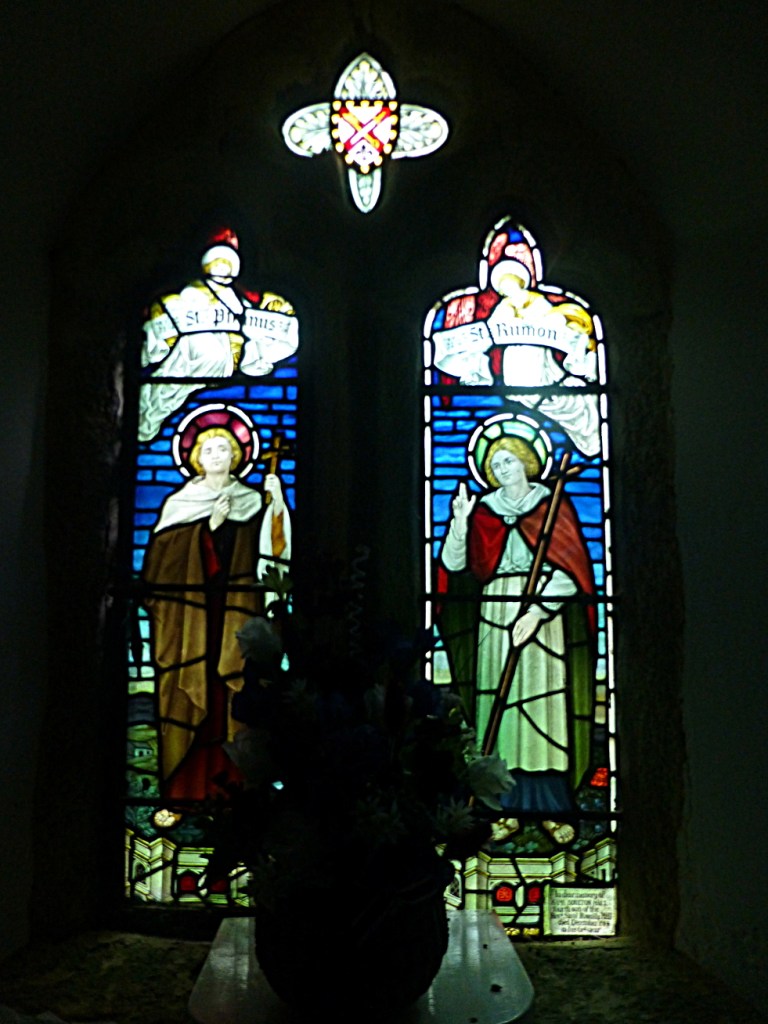
St Piranus and St Rumon, Ruan Minor Church
This year is an especially significant celebration, with the recent approval of new status to Kernewek, giving it the same protection and promotion as the other Celtic languages in the British Isles. When I was there five years ago I saw only a few signs in Kernewek, so it will be exciting to see more in future visits.
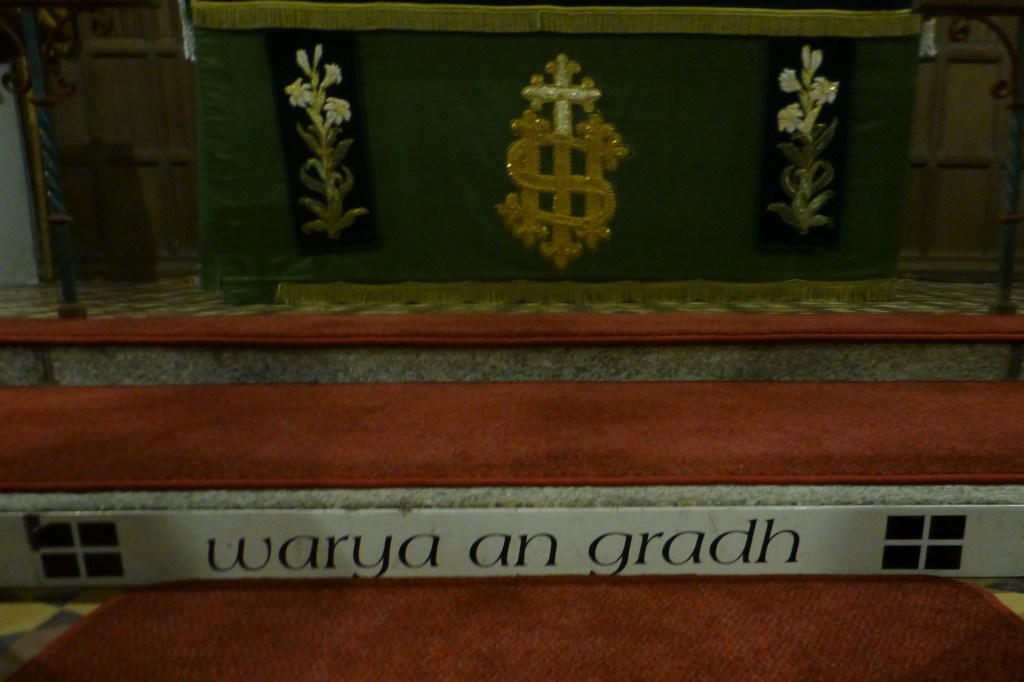
“Mind the step” in Kernewek (Cornish), Ruan Minor Church
On the other side of the world during this Gool Peran, I am celebrating by trying my hand at the traditional Cornish hevva cake, which was made to celebrate the arrival of pilchard shoals as no doubt my ancestors on the fishing boats would have done.
There are different explanations of hevva, which comes into English as heavy, although it is supposed to be light in texture. Crammed with dried fruit, I am hoping that my hevva cake can’t go wrong!

My first hevva cake, cut to resemble the fishing nets of Cornwall
 Language alive
Interesting- one day I’ll make it over there to check out the family history!
LikeLike