
In 2014 I was lucky enough to visit Dhaka in Bangladesh. We stayed in a quiet leafy suburb, evocative of colonial times, with the sound of rickshaw bells and the odd dog barking. A short drive away were the noisy gridlocked roads which characterise most of the city.
I had heard about Shaheed Minar, the “Martyrs’ Monument”, built to commemorate students who were killed while protesting their right to speak Bangla (Bengali) on the 21st of February 1952, when Bangladesh was officially East Pakistan and Urdu was the national language. At the suggestion of Bangladesh, the 21st of February was designated UNESCO’s International Mother Language Day in 2000.
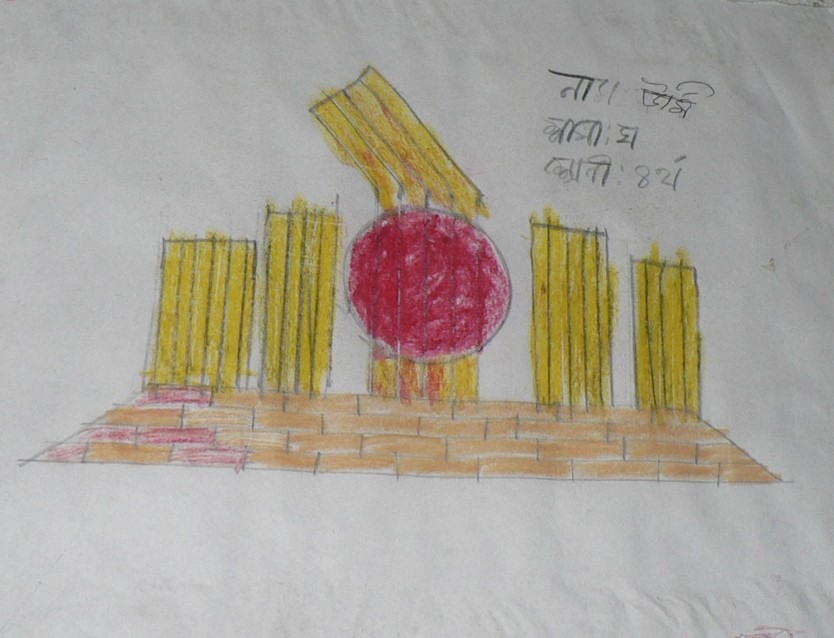
Given its importance, organising a taxi to visit the monument was not as easy as I had expected. It seemed that Shaheed Minar was not a common destination for foreigners. Eventually the guest house staff understood and wrote it down for us in Bangla – even if the taxi driver could not read, he could find someone who did. When we arrived at the monument it was being used by a group of protestors which we were told were from Chittagong minorities. I described more about the visit to Shaheed Minar and Dhaka here.

In 2024 student protests at Shaheed Minar once again played an important part in political changes in Bangladesh. Their commitment to democracy is inspiring and worth celebrating as part of this ‘silver jubilee’ of International Mother Language Day. The United Nations website says:
The 25th anniversary of International Mother Language Day celebrates a quarter-century of efforts to preserve linguistic diversity and promote mother tongues. This milestone emphasizes the importance of language preservation in safeguarding cultural heritage, improving education, and fostering more peaceful societies.
However, the idea of a “mother language” is not always straightforward. Discussions around a translation of ‘International Mother Language Day’ into Gamilaraay, the Aboriginal language I am working to support in Australia, made clear that a literal translation makes no sense. A colleague mentioned he was told that traditionally:
Mothers are from outside the language group, and children are told, by grandparents, something like: “Learn language from us and your father, not from your mother.”
It is often said that for Aboriginal people the land, language and people are one and the same. This is reflected in the grammar of the language, where language is not “from” or “of” the land, but is “part of” the land. So our translation reflects that “inalienable possession”. We have used ngurrambaa “family land” instead of “mother”, and the garay or “word/s” have no possessive suffix.

(www.winanga-li.org.au/yaama-gamilaraay)
UNESCO estimates that every two weeks a language disappears. However it is expressed, this day highlights the importance of celebrating – and nurturing – all of the languages which make up our world.
 Language alive